
Kidney Awareness Unit
Operation Hours : Walk in on request
Services Provided:
* Blood pressure checking
* Blood glucose checking
* Body composition monitoring
Education Talk
“Care Your Kidney”
We also give Education Talk “Care Your Kidney” & Health screenings to Primary/Secondary/College students, church members, association, rural areas and also others.
Please contact Ms. Emily Lee or Sr. Ling Ngok Ing at 084-343500 for further arrangement.
About Kidney Awareness Unit
In recent years, our living standards and lifestyles are changing dramatically, as the nation’s economy continues to develop and progress. Due to the fast pace of life in general; dining out, eating excessively, coupled with lack of exercises, and the extreme demands of most modern day jobs have greatly altered our diets as compared to some 20 or 30 years ago. There are many fast food outlets springing up even in the rural towns and villages; resulting in the rise of numbers diagnosed with diabetes and hypertension today.
Unfortunately, diabetes and hypertension are not just a growing health problem in Malaysia; these two diseases are also the most common contributors to End-Stage Renal Disease (ESRD) – in simpler terms, end-stage kidney failure. According to the 21st Report of the Malaysian Dialysis and Transplant Registry 2013, 56% out of the total 4,522 new cases of dialysis patients are diabetics and 8% are hypertensive.
In order to combat the rising figures of patients suffering from kidney-related diseases, SKF launched the Kidney Awareness Unit (K.A.U.) on 14th October 2015. Our Board Chairman, Temenggong Dato Vincent Lau Lee Ming officiated the launching of the unit to help the public with the following objectives:
*Early detection & prevention through health screenings.
*Educate the general public about kidney diseases and a healthy life style.
*To delay the progression of kidney diseases.
*Give educational talks to primary/ secondary/ college students,
*church members, associations, rural folks and others.
Know Your Kidneys
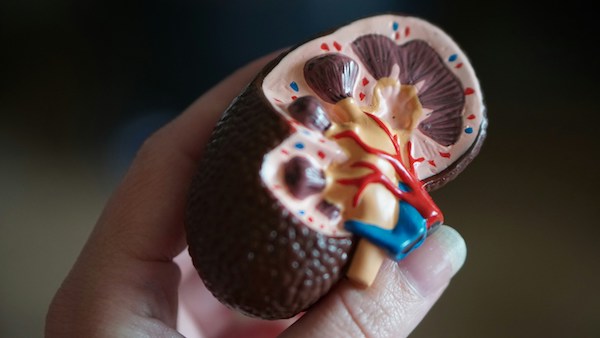
The role of the kidneys is often underrated when we think about our health. In fact, the kidneys play a vital role in the daily workings of your body. They are so important that nature gave us two kidneys, to cover the possibility that one might be lost to an injury. We can live quite well with only one kidney and some people live a healthy life even though born with one missing kidney. However, with no kidney function, death occurs within a few days!
What Are Kidneys?
*Human kidneys are bean-shaped organs.
*Located near the middle of the back on both sides.
*Each kidney is about the size of a fist and weighs about 150 grams.
*Each kidney has about one million nephrons, which are tiny, filtering units.
*The nephrons make it possible for the kidneys to filter the body’s entire blood.
*Supply every two (2) minutes which is around 180 liters of fluids per day to produce 2 litres of urine.
What Do Kidneys Do?
1) Remove waste products.
Blood is filtered by the nephrons. The filtering process removes the waste, toxins and excess water from the blood to form urine. Urine flows from the kidneys to the ureters and then stored in the bladder until we urinate.
2) Regulate the chemical balance in our body.
3) They release three (3) important hormones:
Erythropoietin – stimulates red blood cell formation.
Renin – maintains a normal blood pressure.
Active Vitamin D – helps keep our bones strong.
Treatment & Prevention
Treatment
If the kidney damage is in the early stages, it can be controlled with medication and diet. However, there is no recovery from End-Stage Renal Disease (ESRD). There are two (2) ways to treat ESRD:
1. Kidney Transplant
Kidney transplant is the process where a kidney is surgically removed from a donor and implanted into the patient. The patient may receive a kidney from a family member, a spouse or a close friend. They are known as living-related donors.
The most compatible match is usually a sibling, as their genetic make-up may closely match. In addition, the patient can also receive a kidney from a recently deceased person, known as a cadaveric donor. Transplant is by far the best means of treatment, as the “replacement kidney” can substitute almost fully the lost functions of the failed kidneys, and allow the patient to lead a normal life.
2. Dialysis
The word ‘dialysis’ means filtering, or the selective removal of certain substances from the blood. The idea is that, if by artificial means, we can remove enough of the poisonous wastes, water and salts that have built up due to kidney failure, then a reasonable level of health can be restored.
There are two (2) forms of dialysis;
2.1 Peritoneal Dialysis
Peritoneal dialysis (PD) is an alternative treatment to Haemodialysis. A special sterile fluid is introduced into the abdomen through a permanent tube that is placed in the peritoneal cavity. The fluid circulates through abdomen to draw impurities from surrounding blood vessels in the peritoneum, which is then drained from the body.
2.2 Haemodialysis
Haemodialysis is a way of cleansing the blood of toxins, extra salts and fluids through a dialysis machine. It helps maintain proper chemical balance such as potassium, sodium and chloride and keeps blood pressure under control.
How does it work?
During dialysis, two needles will be inserted into the vascular access, one to remove the blood and the other to return cleansed blood to the body. The patient is connected (via tubing) to the dialysis machine through a vein in the arm, the blood is pumped from the body to a special filter called the dialyzer, which is made of tiny capillaries.
Blood is continuously pumped through the dialyzer, where waste products and excess water are removed. The blood becomes purified when the waste products diffuse from the blood across the membrane of these tiny capillaries. This purified blood is then returned to the patient’s body through larger tubes.
Haemodialysis is performed 3 times a week, with each session lasting about 4 hours, depending on the body size and medical condition. At SKF, patients can choose between 2 sessions i.e. Mondays, Wednesdays and Fridays or Tuesdays, Thursdays and Saturdays.
Prevention
There are several easy ways to reduce the risk of developing kidney disease. Some small changes in behavior can have enormous health benefits.
Eight (8) Golden Rules to reduce the risks are:
1. Keep fit and active.
2. Keep regular control of your blood sugar level.
3. Monitor your blood pressure.
4. Eat healthy and keep your weight in check.
5. Stay hydrated.
6. Do not smoke.
7. Do not take over-the-counter pills on a regular basis.
8. Get your kidney function tested if you have one or more of the “high risk” factors.